
Scan a QR code
A shopper scans a QR code linked to a product or shelf experience. The experience opens in their mobile browser.

THE iNTERACT PLATFORM
iNteract brings together AI-powered shopping assistance and Retail Intelligence in a cloud-based platform designed for physical stores.
It starts with something simple: a QR code that opens a useful product conversation on a shopper's phone.
A shopper scans a QR code linked to a product or shelf experience. The experience opens in their mobile browser.
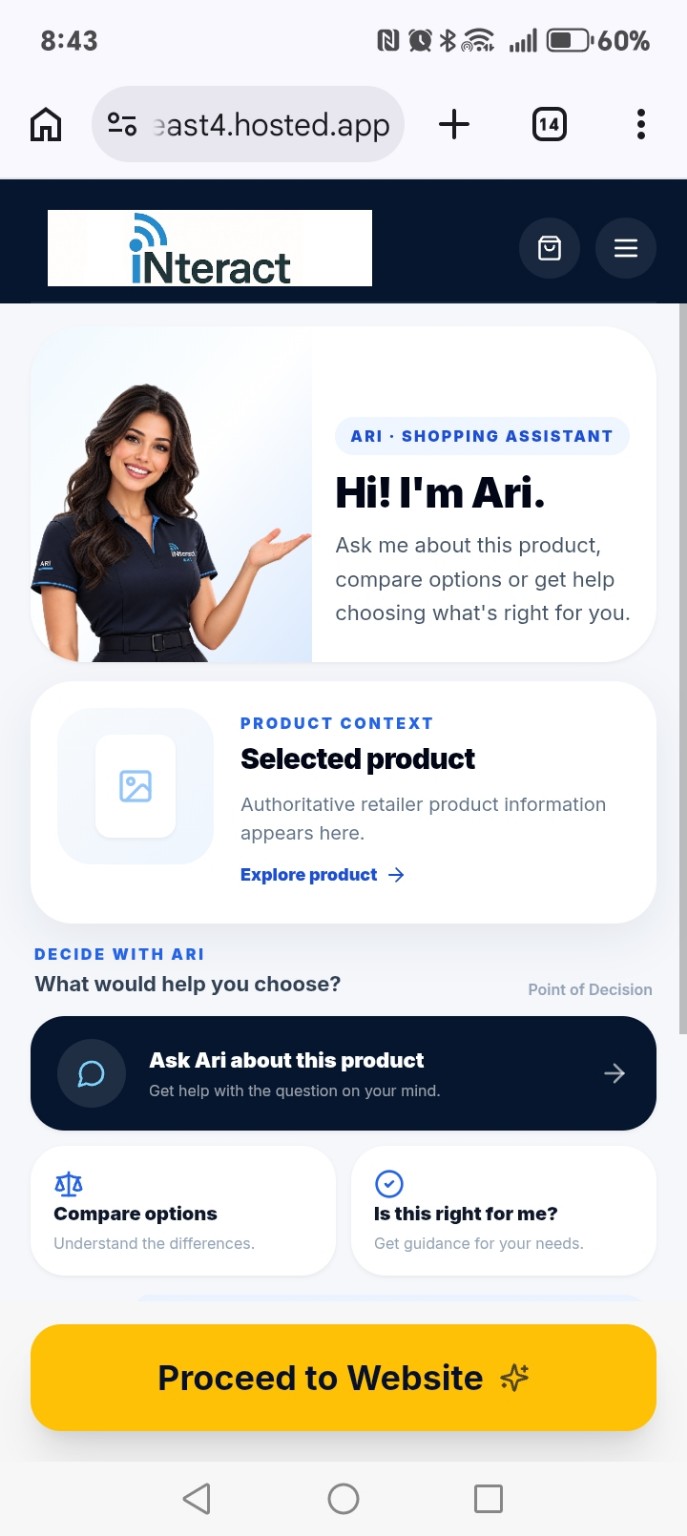
ARI helps shoppers understand product information and ask follow-up questions. What ARI can answer depends on the information available for the product.

Shoppers can look into product features, relevant details and questions that matter to their choice. Product comparisons are being developed and validated for supported scenarios.
Discover what shoppers want to know.
Available retailer reporting brings together information from shopper interactions, helping the business identify topics worth exploring further.
Illustrative journey and example screens.
A product label cannot answer every question. A store employee cannot always be at every shelf. iNteract gives shoppers another convenient way to find information while they are choosing.
ARI is designed to help with product details, features and specifications based on the information provided for the experience. Shoppers can ask a question in their own words and follow up if they need more clarity.
The goal is to support shoppers and store teams, not replace knowledgeable staff.
The purpose is to make relevant information easier to reach at the shelf. Depending on what is supplied and prepared for the experience, that information can include product details and specifications, manufacturer or brand content, care or usage information and frequently asked questions.
A shopper can ask in their own words rather than search through a fixed label. ARI's answers depend on the relevant product information available. Helpful assistance should make that information easier to understand, not create missing product facts.
Comparison functionality has been developed and remains under validation for supported scenarios. A useful comparison needs the right products to be identified and suitable information for both. It is not a promise to compare any two items in any store.
The wider platform direction includes access to pricing, availability and promotional information. What can be shown depends on the information and connections agreed for the particular experience. A QR scan alone does not establish a live stock or price feed.
The aim is to make assistance relevant to the product and the shopper's question. Broader personalised recommendations, alternatives and promotional content depend on supported functions and suitable information; they are not assumed to be available in every deployment.
The shopper experience is one side of the platform. Retailers already have valuable information about sales. Retailer-facing tools provide a way to manage QR activations and review supported interaction information, bringing pre-purchase questions into the business's own review process.
In a demonstration, teams can explore how products and QR experiences are managed, how available interaction information is presented and which reporting views suit the questions they want to investigate. Product interest, information requests and engagement patterns can be considered together rather than as isolated events.
A reporting discussion can also cover campaign and store activity reporting, comparison behaviour, time spent, engagement paths, configurable measures and report exports. The exact events recorded, available filters, reporting freshness and export functions need to be confirmed in the current demonstration and agreed scope. These topics describe what to assess, not a claim that every reporting option is ready for every retailer.
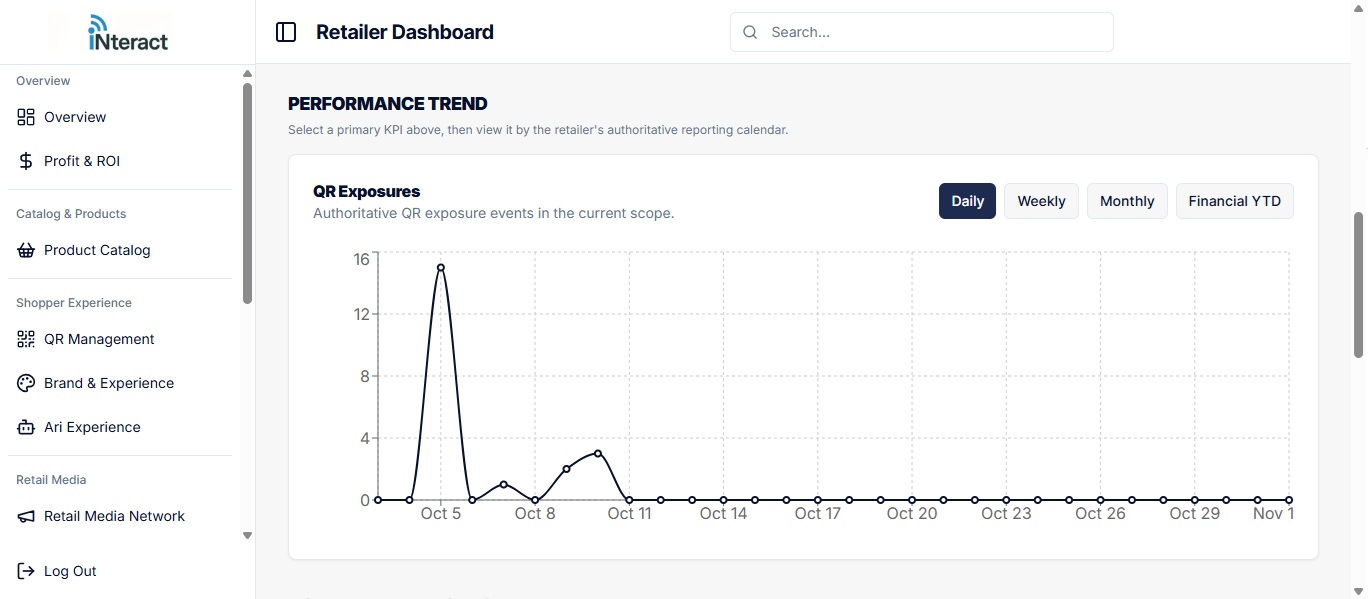 View full-size screenshot
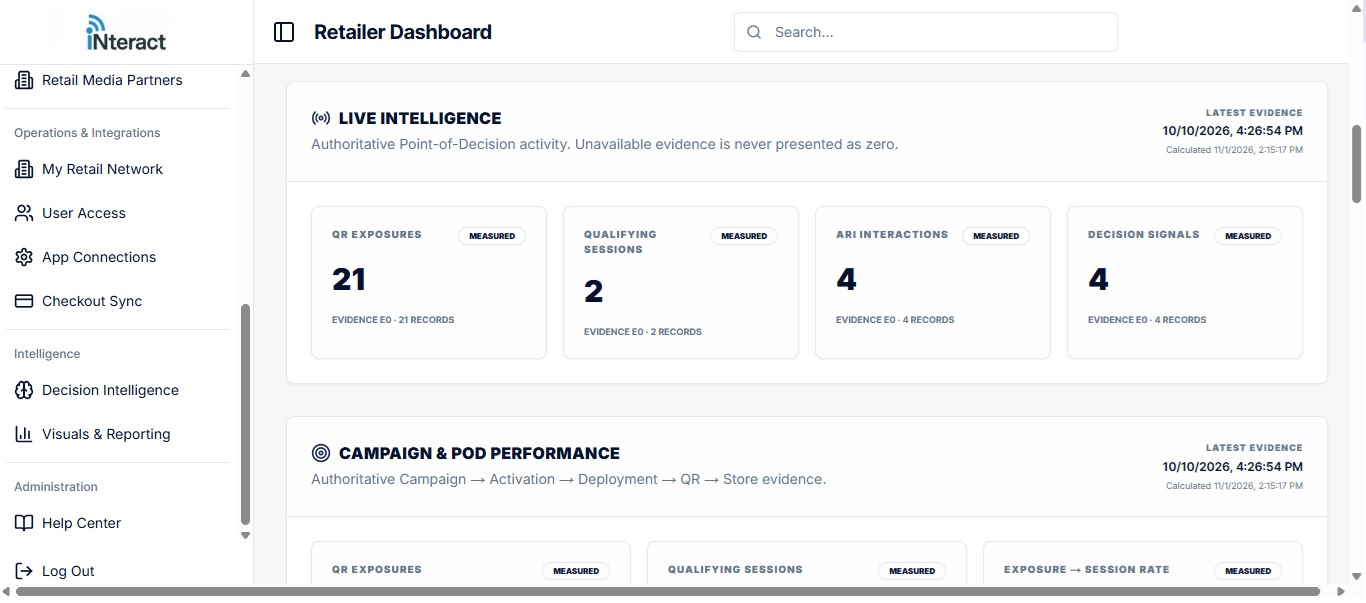 View full-size screenshot
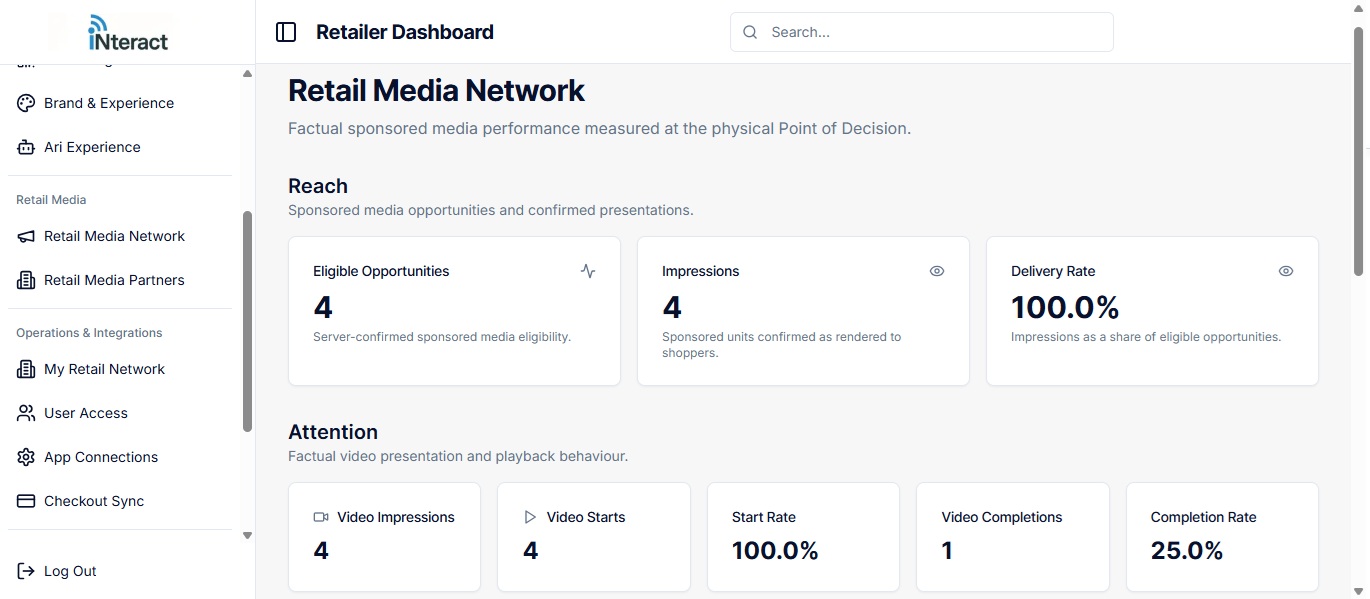 View full-size screenshot
Platform screenshots supplied by the founder. Displayed figures are not evidence of commercial performance or verified retailer deployments.
iNteract is designed to support a retailer-branded experience, powered by iNteract behind the scenes. It is delivered as Software-as-a-Service (SaaS), so retailers do not need to build and maintain a separate AI shopping-assistance platform themselves.
For the initial QR-based experience:
Product information, branding, QR placement and store readiness still need to be prepared for each deployment. Existing retailer-app integration is a possible extension, not a requirement for getting started.
The platform is intended for store environments, from a single location to larger retail organisations. The right starting point depends on the products, the questions shoppers ask and the information the retailer can provide.
The standalone browser experience provides a way to begin. Shoppers scan a QR code using their smartphones, so a retailer can explore product assistance without first commissioning a separate customer application.
The platform is intended to complement existing apps, loyalty programmes and online experiences, rather than replace them. Extending a retailer app into the store is a possible development path. The connections, access and customer journey would need separate agreement and validation.
Technology providers, digital agencies and retail innovation partners can discuss how in-store engagement might complement a broader solution. Any connection to another platform needs its own technical and commercial assessment; no existing integration or partnership is implied.
Cloud delivery is intended to reduce the amount of new technology a retailer needs to introduce in-store. A small initial scope also gives teams an opportunity to prepare information, place QR codes and understand the practical effect on store operations before considering more locations.
For a larger rollout, the discussion needs to cover the product range, store network, information quality, connectivity, retailer administration and support arrangements. The platform's ambition to serve single stores and larger networks is not a guaranteed store capacity or a fixed launch timetable.

The initial browser-based route avoids a dedicated iNteract app download. Participation in a retailer's loyalty programme is not intended to be a prerequisite for the basic product-help journey. The precise access or registration flow should be confirmed in the demonstration.
The platform is designed with privacy in mind and with the aim of supporting responsible handling of shopper information under South Africa's Protection of Personal Information Act, or POPIA. The information collected, any identifiers, access permissions, retention and shopper notices must be agreed and verified for each implementation. No privacy certification or unconditional anonymity is claimed.
A shopper's questions should provide useful context for the retailer without being mistaken for a complete record of that person's shopping behaviour.
The same technology that connects shoppers to product help may, over time, create opportunities for relevant brand and supplier communication at the shelf.
In-store Retail Media is part of iNteract's future direction. It is not presented as an established advertising service or a promise of campaign results.
No. The initial experience opens in a mobile browser when a shopper scans a QR code.
No. The initial shopper experience can operate without integration into the point-of-sale system. Any additional integration would need to be separately agreed and validated.
The basic shopper experience uses QR codes and smartphones, without dedicated scanning hardware. Store signage and connectivity still need to be considered.
iNteract is positioned as a white-label platform designed to support retailer branding. The specific branding options will be confirmed as part of the demonstration and deployment scope.
A QR code is the entry point. The added value is ARI's interactive product help and the Retail Intelligence that can be gained from supported shopper interactions.
iNteract is designed with privacy in mind. The specific information collected, access permissions and applicable notices must be confirmed for each implementation. We do not claim a privacy certification.
Yes, a focused store or product-category evaluation is the intended way to begin before considering wider deployment.
The platform is intended to complement a retailer's digital services. App integration is a possible extension that needs separate scoping and validation. It is not required for the initial browser-based experience.
The initial model uses cloud software, product information and QR codes. Begin with a focused pilot so the team can prepare the information, store placement and responsibilities before considering wider deployment. Timing and effort depend on that scope.
A loyalty programme can help a retailer understand known customers and purchase activity. iNteract focuses on supported product questions and interactions before checkout. The two can provide different views of the customer journey, without assuming that their data is integrated or that a shopper has joined a loyalty scheme.
Point-of-sale reporting records transactions. Product assistance can add information about the questions shoppers choose to ask before a transaction. It complements sales analysis, rather than proving why every purchase happened.
Its primary purpose is shopper engagement and Retail Intelligence. Future in-store Retail Media is a potential extension of that foundation, not an established advertising service.
The standalone model is intended to give a retailer without its own app a way to explore in-store assistance. A focused store or category evaluation can help establish what is useful before expanding.
Brands, suppliers and relevant partners are welcome to discuss product information, contextual shopper experiences and future collaboration with retailers. Any campaign, access to reporting or commercial media arrangement would need separate agreement and validation.
Look at whether shoppers can find useful information, whether the questions reveal gaps in product explanations and whether the available reporting supports merchandising or customer-experience decisions. The evaluation should establish what is useful for the business, without assuming a sales improvement.